A nine-month, one-to-one research programme. The student writes the paper.
₹85,000 in India, $1,950 in the US · paid in three instalments
For motivated students in Grades 8–12, and the parents weighing it up with them. A subject expert, matched one-to-one, guides the question and the method and gives feedback on the writing. Mentorship, not ghostwriting.
Month 1: what do I actually want to find out?
the subject
whole buildings
greener cement
reused materials
plant-based materials
smart materials
core concepts
research methods
a study of whole buildings
reused materials
greener cement
plant-based materials
these disagree
whole buildings
greener cement
reused materials
plant-based materials
smart materials
the gap
Choosing building materials to cut carbon in construction
by the student
Abstract. No single material comes out best. The right choice depends on how it will be used.
Keywords. construction; carbon footprint; reused materials
1. Introduction
Buildings and construction produce over a third of the world's energy-related carbon emissions.
2. Research question
What kinds of greener building materials do recent studies focus on most?
3. Literature review
Each study is placed in one group only, by what it mainly set out to do.
whole buildings
greener cement
reused materials
plant-based materials
smart materials
the gap
4. Methodology
A planned search of one research database, with every study checked by one reader.
5. Results
Table 1. Themes covered
Whole buildings✓
Greener cement✓
Reused materials✓
Plant-based materials✓
Smart materials✓
6. Discussion
Results change with the raw material, the mix, how it cures, and how it ages.
7. Limitations
Only one database was searched, and only one person did the checking.
8. Conclusion
Pick materials to suit the job, the requirements and what is available locally.
References
- [1] United Nations report on buildings and climate.
- [2] A review of cutting carbon in cement and concrete.
- [3] International standard for life cycle assessment.
core ideas first, then the questions.
read widely first. decide later.
four papers read. two disagree.
good. why do they disagree?
three journals or conferences shortlisted
is this really the gap?
main journal or conference, plus a backup
what would prove you wrong?
first search failed. wrote down why.
keep that. it belongs in section 4.
every citation checked, twice
your words. your name.
no reply yet. slides started.
plan the revision now, in case.
your first question still has no answer.
rewriting key findings.
what if they ask about the limits?
again, without the notes.
Submitted
A paper, written in nine months.
Scroll to watch this paper get written, month by month.
How a paper gets written, month by month.
Skip to the feeFoundations & Topic Months 1–3. Output: a research topic and a shortlist of journals or conferences.
Month 1
Subject Foundations
Build core subject knowledge and identify promising areas of interest.
On the page: notes, and a sketch of the subject’s branches.
Month 2
Research Reading and Domain Exploration
Read and summarise at least four research, review or survey papers. Compare relevant domains and identify possible research directions.
On the page: four papers on cards, each summarised in a line.
Month 3
Topic Finalisation and Literature Review
Finalise the topic, study at least four core papers, identify the research gap and shortlist suitable journals or conferences.
New on the page: Title. The cards become a map of five groups and the gap.
12-Week Core Research Sprint Months 4–6. Output: a submitted research paper.
Month 4
Research Design and Methodology
Finalise the question, objectives, evidence sources, key variables or design parameters, and research method. Select a main journal or conference and a backup.
New on the page: Research question. The method is designed; it is drafted next month.
Month 5
Implementation and Initial Writing
Conduct the planned analysis, experiment, simulation or implementation. Draft the introduction, literature review and methodology.
New on the page: Introduction, Literature review, Methodology.
Month 6
Paper Completion and Submission
Complete the investigation and remaining sections. Finalise citations, formatting and submission documents.
New on the page: Abstract, Keywords, Results, Discussion, Limitations, Conclusion, References.
Review & Presentation Months 7–9. Output: a revised paper, if comments come back, and a conference-ready presentation.
Month 7
Submission Monitoring and Presentation Planning
Monitor editorial communication, begin the presentation and prepare a revision plan if comments arrive.
Submitted. The page waits on the editor.
Month 8
Revision and Registration Support
Address comments where applicable, prepare the response or camera-ready paper, and support resubmission and registration.
Comments, where they arrive, go back on the page.
Month 9
Presentation Preparation
Finalise the presentation or poster, conduct mock presentations and practise answering research questions.
The page becomes a talk.
Who guides the work.
MachinedMind mentors are subject experts, researchers and industry practitioners, matched one-to-one to each student's topic.

Dr. Shubhanjali Pathak
Physics researcher. Gurugram, India.
PhD in Physics and a former research scholar at IIT Mandi, with more than six years in research. She's good at making hard physics and simulations easy to follow.

Abhishek Gaurav, CFA
Portfolio manager and CFA charterholder. Madrid, Spain.
Manages investment portfolios and holds the CFA charter. He works on asset allocation and equity research, and uses data and machine learning to test investment ideas.
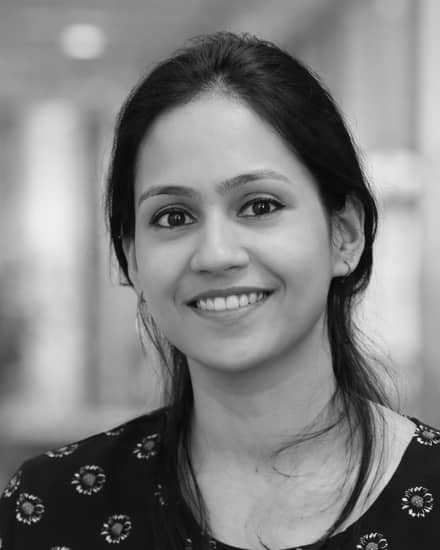
Vinita Kumari
Software engineer. Frankfurt, Germany.
A software engineer in Frankfurt who tests applications and builds the automation behind those tests. She's worked across India and Singapore.


Find your subject.
We match each student to a mentor by subject. You’ll see your mentor’s full profile after your fitment call.
- Assistant professor · Blockchain, cybersecurity, data privacy
- Postdoctoral researcher · Biotechnology, bioinformatics, cancer biology
- Doctoral researcher · Robotics, automation, drones
- Doctoral researcher · Semiconductors, solar cells, batteries
- Doctoral researcher · Water resources, environmental engineering
- Associate professor · AI, machine learning, data science
- Assistant professor · Programming, algorithms, computer science
- Industry expert · Wearables, computer vision, IoT
- Industry expert · AI, fintech, business analytics
- Finance specialist · Finance, economics, global affairs
When the journal’s initial review comes in.
A journal’s initial review usually asks for changes. This is a real example from one of our students’ papers, anonymized and paraphrased.
The journal’s reviewer said, in short:
“The paper never comes back to its first research question.”
What changed in the paper:
“The findings section was rewritten so that each research question gets its own answer, in order.”
The journal’s reviewer said, in short:
“The summary of the evidence leans toward the good results.”
What changed in the paper:
“The summary now says when each finding holds, and includes negative or uncertain results.”
Student research, latest first
Atomic clock synchronization
LatestHigh school student · Physics
A physics paper on keeping atomic clocks in sync, accepted to be presented at an international signal processing conference this November, in a session with university researchers.
Greener building materials: a review of the research
High school student · Environmental engineering
A paper that went through a full round of peer review at a student journal. The reviewer questioned the method, the sources and the comparisons, so the manuscript was rebuilt: a search that anyone can repeat, a checked set of studies, figures without support taken out, and a reply to every comment, point by point. The revised paper has been submitted and the journal has not yet decided.
Sustainable aviation fuels
High school student · Energy and aerospace
A research project on sustainable aviation fuel, currently in progress with a subject mentor.
Aerospace research and simulation
High school student · Aerospace engineering
Research paired with a working simulation, so the findings can be demonstrated as well as described.
AI and machine learning research paper
High school student · Artificial intelligence
A research paper in AI and machine learning, currently in progress with a subject mentor.
Mentorship, not ghostwriting. The student does the work. No publication, admission, competition or patent-grant guarantees.
The fee.
India₹85,000United States & international$1,950
Paid in three instalments. Nine months, including a 12-week core research sprint.
| Instalment | Due | Amount |
|---|---|---|
| Instalment 1 | Before programme commencement | ₹30,000 India, $690 US & international |
| Instalment 2 | At the beginning of Month 3 | ₹30,000 India, $690 US & international |
| Instalment 3 | At the end of Month 5 | ₹25,000 India, $570 US & international |
Not included
- Conference registration fees
- Publication charges
- Paid datasets
- Laboratory access
- Specialist software
- Prototype materials
- Travel and accommodation
Book a free fitment call
A conversation about the student, the subject and whether the programme fits. Bring your questions, whichever of you is asking.
Prefer to message? WhatsApp us.Prefer to write? info@machinedmind.com.