Research Paper Mentorship Programme
A nine-month, one-to-one research programme that takes a student from subject foundations to a submitted paper and a conference-ready presentation. The student writes the paper. Mentorship, not ghostwriting.
Three phases, nine months.
The paper itself is built in a focused 12-week core research sprint. The months before it give the student the subject depth to choose a real research gap. The months after it cover review, revision and presentation.
Choosing building materials to cut carbon in construction
by the student
whole buildings
greener cement
reused materials
plant-based materials
smart materials
the gap
three journals or conferences shortlisted
is this really the gap?
Month 3 Months 1–3
Foundations & Topic
Build subject knowledge, read the research literature, and settle on a topic with a clear research gap.
You finish with: A research topic and a shortlist of journals or conferences
Choosing building materials to cut carbon in construction
by the student
Abstract. No single material comes out best. The right choice depends on how it will be used.
Keywords. construction; carbon footprint; reused materials
1. Introduction
Buildings and construction produce over a third of the world's energy-related carbon emissions.
2. Research question
What kinds of greener building materials do recent studies focus on most?
3. Literature review
Each study is placed in one group only, by what it mainly set out to do.
whole buildings
greener cement
reused materials
plant-based materials
smart materials
the gap
4. Methodology
A planned search of one research database, with every study checked by one reader.
5. Results
Table 1. Themes covered
Whole buildings✓
Greener cement✓
Reused materials✓
Plant-based materials✓
Smart materials✓
6. Discussion
Results change with the raw material, the mix, how it cures, and how it ages.
7. Limitations
Only one database was searched, and only one person did the checking.
8. Conclusion
Pick materials to suit the job, the requirements and what is available locally.
References
- [1] United Nations report on buildings and climate.
- [2] A review of cutting carbon in cement and concrete.
- [3] International standard for life cycle assessment.
what would prove you wrong?
first search failed. wrote down why.
every citation checked, twice
your words. your name.
Submitted
Month 6 Months 4–6
12-Week Core Research Sprint
Design the method, run the analysis, experiment, simulation or build, write the paper and submit it.
You finish with: A submitted research paper
Choosing building materials to cut carbon in construction
by the student
Abstract. No single material comes out best. The right choice depends on how it will be used.
Keywords. construction; carbon footprint; reused materials
1. Introduction
Buildings and construction produce over a third of the world's energy-related carbon emissions.
2. Research question
What kinds of greener building materials do recent studies focus on most?
3. Literature review
Each study is placed in one group only, by what it mainly set out to do.
whole buildings
greener cement
reused materials
plant-based materials
smart materials
the gap
4. Methodology
A planned search of one research database, with every study checked by one reader.
5. Results
Table 1. Themes covered
Whole buildings✓
Greener cement✓
Reused materials✓
Plant-based materials✓
Smart materials✓
6. Discussion
Results change with the raw material, the mix, how it cures, and how it ages.
7. Limitations
Only one database was searched, and only one person did the checking.
8. Conclusion
Pick materials to suit the job, the requirements and what is available locally.
References
- [1] United Nations report on buildings and climate.
- [2] A review of cutting carbon in cement and concrete.
- [3] International standard for life cycle assessment.
what would prove you wrong?
first search failed. wrote down why.
your words. your name.
your first question still has no answer.
what if they ask about the limits?
again, without the notes.
Submitted
Month 9 Months 7–9
Review & Presentation
Track editorial communication, revise in response to comments, and prepare and rehearse the presentation or poster.
You finish with: A revised paper, if comments come back, and a conference-ready presentation
Each week.
| When | Sessions | Student's work |
|---|---|---|
| Month 1 | Two 30-minute 1:1 sessions each week | Weekly subject-learning post |
| Months 2 to 9 | One 30-minute 1:1 session each week | Reading, research and writing between sessions |
Month by month.
The months marked in red are the 12-week core research sprint.
- Month 1
Subject Foundations
Build core subject knowledge and identify promising areas of interest.
- Month 2
Research Reading and Domain Exploration
Read and summarise at least four research, review or survey papers. Compare relevant domains and identify possible research directions.
- Month 3
Topic Finalisation and Literature Review
Finalise the topic, study at least four core papers, identify the research gap and shortlist suitable journals or conferences.
- Month 4
Research Design and Methodology
Finalise the question, objectives, evidence sources, key variables or design parameters, and research method. Select a main journal or conference and a backup.
- Month 5
Implementation and Initial Writing
Conduct the planned analysis, experiment, simulation or implementation. Draft the introduction, literature review and methodology.
- Month 6
Paper Completion and Submission
Complete the investigation and remaining sections. Finalise citations, formatting and submission documents.
- Month 7
Submission Monitoring and Presentation Planning
Monitor editorial communication, begin the presentation and prepare a revision plan if comments arrive.
- Month 8
Revision and Registration Support
Address comments where applicable, prepare the response or camera-ready paper, and support resubmission and registration.
- Month 9
Presentation Preparation
Finalise the presentation or poster, conduct mock presentations and practise answering research questions.
Month 1: subject foundations.
The first month builds a strong foundation in the chosen subject, so the student can find an area suitable for deeper research.
What it covers
- Core concepts, terminology and major branches within the selected subject
- Fundamental theories, models and real-world applications
- Current developments and emerging research areas
- Research methods commonly used in the discipline
- Experimental, computational, analytical or design-based approaches
- Academic reading, source evaluation and research ethics
- Topic feasibility, resource availability and appropriate project scope
- Selection of a suitable domain for deeper research
Learning posts
In Month 1 the student prepares one short learning post each week; from Month 2 onward, one post every two weeks during the active research period. The mentor reviews each draft for accuracy and clarity before publication. Students who are not eligible to use LinkedIn may keep the posts as a private learning journal.
What the research paper includes.
The final structure is adapted to the chosen conference or journal.
The parts of the paper
- Title
- Abstract
- Keywords
- Introduction
- Research question and objectives
- Literature review
- Methodology
- Data or implementation
- Results
- Discussion
- Limitations
- Conclusion
- References
- Appendices or supplementary material where required
How we choose a conference or journal
- Relevance to the research topic and publication scope
- Submission deadline, academic credibility and peer-review process
- Paper-length, formatting and submission requirements
- Registration or publication fees
- Online or in-person presentation format
- Conference location, dates and suitability for the student's academic level
A main journal or conference and one backup are shortlisted.
Who guides the work.
MachinedMind mentors are subject experts, researchers and industry practitioners, matched one-to-one to each student's topic.
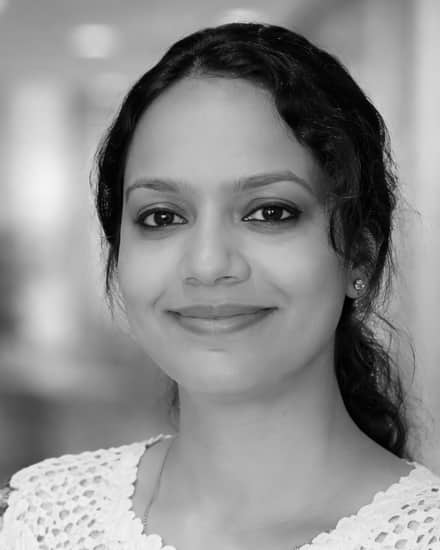
Dr. Shubhanjali Pathak
Physics researcher. Gurugram, India.
PhD in Physics and a former research scholar at IIT Mandi, with more than six years in research. She's good at making hard physics and simulations easy to follow.
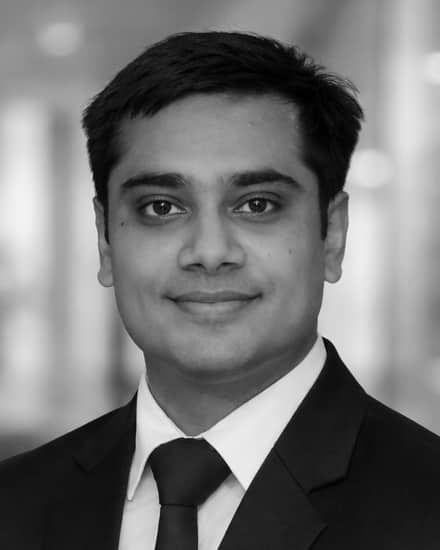
Abhishek Gaurav, CFA
Portfolio manager and CFA charterholder. Madrid, Spain.
Manages investment portfolios and holds the CFA charter. He works on asset allocation and equity research, and uses data and machine learning to test investment ideas.
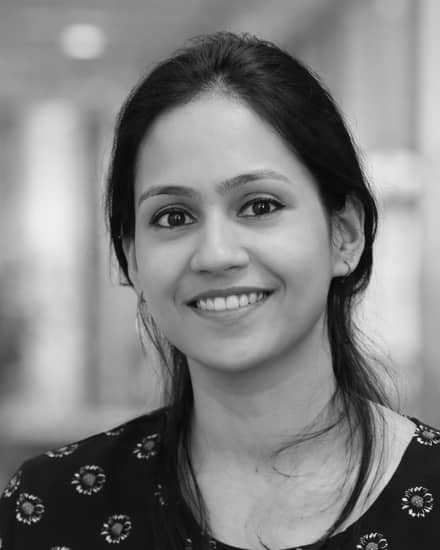
Vinita Kumari
Software engineer. Frankfurt, Germany.
A software engineer in Frankfurt who tests applications and builds the automation behind those tests. She's worked across India and Singapore.


Find your subject.
We match each student to a mentor by subject. You’ll see your mentor’s full profile after your fitment call.
- Assistant professor · Blockchain, cybersecurity, data privacy
- Postdoctoral researcher · Biotechnology, bioinformatics, cancer biology
- Doctoral researcher · Robotics, automation, drones
- Doctoral researcher · Semiconductors, solar cells, batteries
- Doctoral researcher · Water resources, environmental engineering
- Associate professor · AI, machine learning, data science
- Assistant professor · Programming, algorithms, computer science
- Industry expert · Wearables, computer vision, IoT
- Industry expert · AI, fintech, business analytics
- Finance specialist · Finance, economics, global affairs
The fee.
India₹85,000United States & international$1,950
Paid in three instalments. Nine months, including a 12-week core research sprint.
| Instalment | Due | Amount |
|---|---|---|
| Instalment 1 | Before programme commencement | ₹30,000 India, $690 US & international |
| Instalment 2 | At the beginning of Month 3 | ₹30,000 India, $690 US & international |
| Instalment 3 | At the end of Month 5 | ₹25,000 India, $570 US & international |
Not included
- Conference registration fees
- Publication charges
- Paid datasets
- Laboratory access
- Specialist software
- Prototype materials
- Travel and accommodation
Viewing from elsewhere? See India or United States.
Programme notes
- The student prepares the original research work and manuscript under the mentor's guidance and feedback.
- Research and publication activities follow the schedule of the selected conference or journal.
- One alternative journal or conference may be considered if redirection becomes necessary.
Get the brochure.
A PDF of this programme, with the full timeline and fee schedule, to share with your family or counselor.
Book a free fitment call
A conversation about the student, the subject and whether the programme fits. Bring your questions, whichever of you is asking.
Prefer to message? WhatsApp us.Prefer to write? info@machinedmind.com.